Updated November 2026 · By Richard Tiland, Founder, New Evolution Video, San Diego
Video production cost in 2026 comes down to four things: shoot days and crew size, concept complexity, post-production scope and deliverables. At New Evolution Video in San Diego, a testimonial package, an “about us” brand video, a commercial and a half-day two-camera shoot are all scoped and priced differently, and we quote by the project rather than by the hour. (How we work with clients is laid out on our video production pricing page.)
After 20 years and more than 2,100 productions in San Diego, we have learned that a useful cost conversation starts with scope, not a rate card. So here is how the cost of a video actually gets built.
Why Most Pricing Guides Don’t Help You
Search “video production cost” and you’ll find aggregator sites reporting that agencies quote a single hourly rate for everything — commercials, documentaries, animation, training videos, all supposedly the same rate. That number isn’t wrong, exactly. It’s just useless.
Almost no serious production company quotes hourly. We quote project-based, because that’s the only honest way to price this work. An hourly rate tells you nothing about how many hours your project needs, and it creates the wrong incentive — you shouldn’t be watching the clock while we’re solving your creative problem. You should know the number before we roll a single frame.
The real question isn’t “what’s your hourly rate.” It’s “what does my project actually require.” Here’s how that gets answered.
What Factors Affect the Cost of Video Production?
Every quote we build comes down to four things.
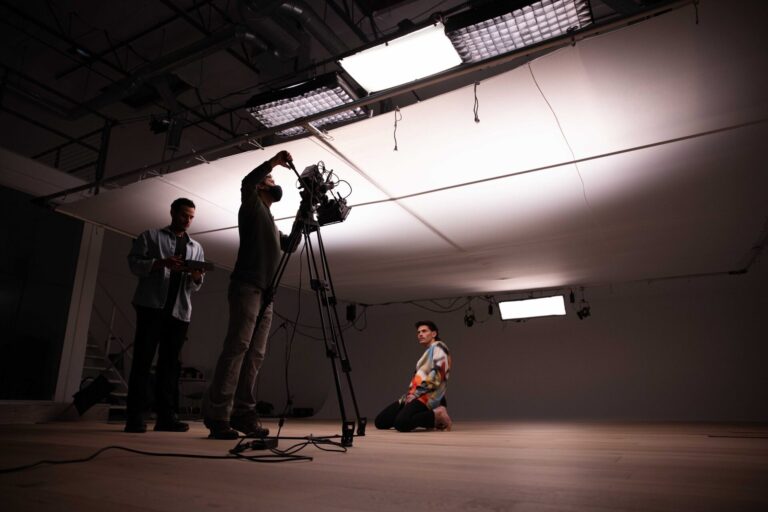
Shoot days and crew size. This is the biggest lever. A single-camera interview with one operator is a fundamentally different production than a multi-location commercial with a director, DP, gaffer, sound mixer, and production assistant. Each crew member is a day rate, and each shoot day multiplies it. This is why smart planning matters — if we can capture your interviews and b-roll in one well-organized half-day instead of two scattered full days, you just saved thousands without touching quality.
Concept complexity. A testimonial is straightforward: great questions, great lighting, great edit. A scripted commercial involves creative development, casting, locations, art direction, and significantly more post-production. The idea drives the budget more than the runtime does.
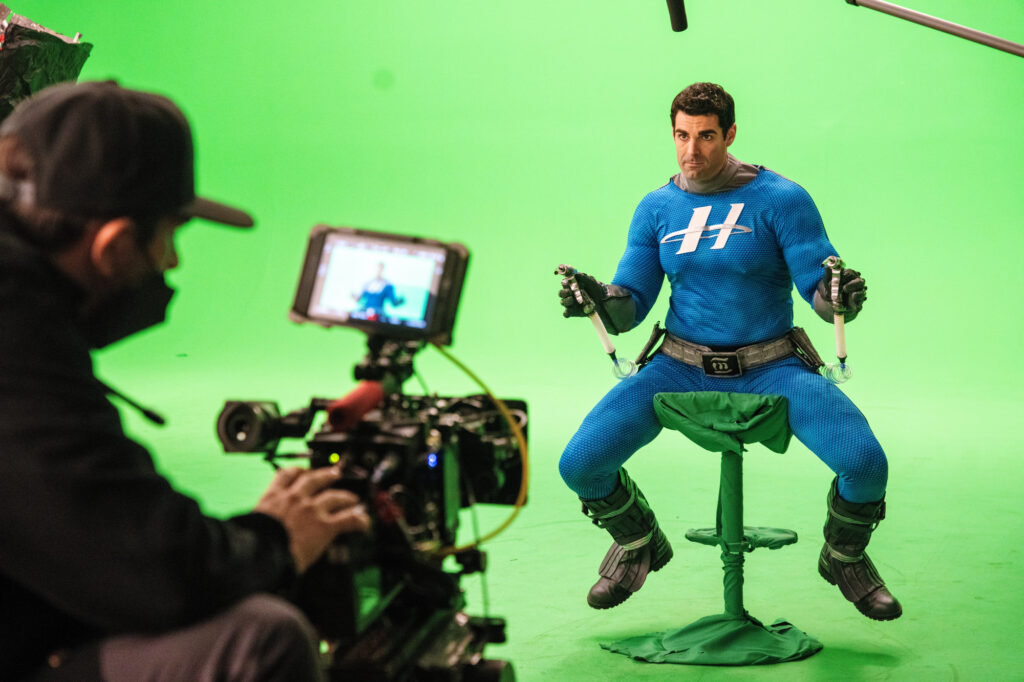
Post-production scope. Editing a 90-second brand video from a half-day of footage is predictable. Adding motion graphics, animation, color-intensive looks, or licensed music changes the equation. Special effects are where budgets quietly double — not because anyone’s padding the invoice, but because that work genuinely takes specialist time.
Deliverables. One master film is the standard deliverable. Extra cuts, lengths and aspect ratios are add-ons, so a hero video plus six social cutdowns in three aspect ratios is a different project. Define this upfront and your budget conversation gets dramatically easier.

Notice what’s not on the list: the type of video. A documentary isn’t inherently more expensive than a corporate video. Scope is scope.
How Much Does Each Type of Video Cost?
Cost follows scope more than video type, and we do not publish a rate card because every project is priced to its own scope. In general terms: a half-day, two-camera shoot is the most cost-effective entry point for professional video. A testimonial or interview-driven piece sits just above it. An “about us” brand video adds creative development, a multi-camera crew and full post-production. A commercial sits at the top because of concept, casting, locations and post. The spread between a clean testimonial and a broadcast campaign is enormous, and what matters is matching the production to what your brand actually needs, which is the first question we ask on every call. To talk through your project, start a conversation with our team.
A real example: the about-us video. We produce these constantly, it’s the workhorse of corporate video. A typical client gets creative development and scripting support, a professionally crewed shoot day (often multi-camera: leadership interviews, team footage, b-roll of the work itself), full post-production with color and licensed music, and a final piece built to live on their homepage, in sales conversations, and across LinkedIn for the next several years. Divide that cost by the lifespan and reach of the asset, and it’s one of the highest-leverage pieces of marketing a company can own.
What’s Included in Video Production Pricing and What Costs Extra?
A legitimate production company brings its own cameras, lenses, lighting, sound gear, and editing pipeline. You should never see a line item for “camera rental” on a standard shoot; that’s built into the rate, and it’s a real advantage of hiring a company over assembling freelancers.
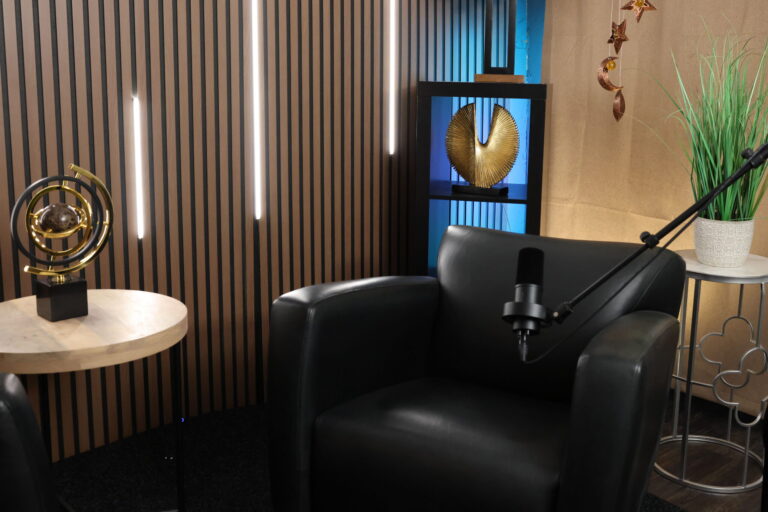
What can add cost, and what you should discuss before signing anything: professional on-camera talent and voiceover artists, location fees or permits when your office isn’t the right setting, travel outside the local area, and specialty rentals for specific creative demands (a jib, a specific vehicle, elaborate props). None of these are hidden fees when the conversation happens upfront. At NEV, they’re in the quote or they don’t exist and because we also operate our own studio, dk3studios, the “we need a location” problem often solves itself.
Does AI Make Video Production Cheaper?
This is the section you won’t find in the generic pricing guides, and it’s reshaping budgets right now.
We’ve integrated AI into our workflows across strategy, scripting, pre-production, and post. What that means for your budget in practical terms: concept development and script iterations that used to eat billable days now happen in hours. Storyboarding and previsualization are dramatically faster, which means fewer surprises and reshoots. Certain post-production tasks: rough assembly, transcription, versioning cutdowns for social have compressed significantly. The net effect is that a budget which bought you one deliverable three years ago often buys you a full content package today.
What AI doesn’t change: the shoot itself. Real lighting, real cinematography, real humans telling your story on camera, that’s still craft, still crew, still day rates. Anyone telling you AI makes professional production nearly free is selling you something that will look like it was nearly free. The advantage goes to companies that use AI to move faster around the shoot, not instead of it.

Is It Cheaper to Produce Video In-House or Hire a Production Company?
If your company publishes video weekly and has the budget for salaries, cameras, lighting, audio gear, and editing infrastructure, an in-house videographer can make sense. For everyone else, the math rarely works. You’re paying year-round for capability you use in bursts, and one person however talented can’t match the range of a full crew with specialized roles.
Hiring a production company means you pay for exactly the production you need, when you need it, with equipment and expertise already accounted for. The honest middle path many of our clients use: an in-house person handles quick-turn social content, and we handle the flagship pieces — the brand video, the commercial, the campaign work that has to represent the company at its best.
Frequently Asked Questions About Video Production Pricing
How much does a corporate video cost in San Diego? The cost of a professionally produced corporate “about us” video depends on crew size, shoot days and post-production scope. A typical project covers creative development, a crewed multi-camera shoot day, and full post-production including color and licensed music. We scope and price it on a call before filming begins.
How much does a 2–3 minute video cost? A 2–3 minute brand or corporate video with professional crew and full post-production is priced by scope: shoot days, crew and post-production. Simpler interview-driven pieces sit at the lower end of that scale.
How much does a commercial cost to produce? A professionally produced commercial is the highest-cost format we make, driven mostly by concept complexity, crew size, number of shoot days and post-production scope — not runtime.
Do video production companies charge hourly or per project? Most established production companies quote per project, not hourly. Project-based pricing means the full scope — pre-production, shoot, and post — is defined and priced before filming begins. Aggregator sites report hourly agency rates, but that figure rarely reflects how real quotes are built.
What’s the cheapest professional video option? A half-day, two-camera shoot is the most cost-effective entry point for professional video. It is enough to capture interviews and b-roll for a testimonial or short brand piece.
Does using AI reduce video production costs? Partially. AI compresses the cost of scripting, storyboarding, versioning, and parts of post-production, so the same budget yields more deliverables in 2026 than it did a few years ago. It does not replace the shoot itself — professional crew, lighting, and cinematography still drive the core cost.
Getting an Accurate Quote
Every real quote starts with scope: what the video needs to accomplish, who it’s for, where it will live, and what deliverables you need. Walk into that conversation with even rough answers and you’ll get a precise number instead of a range.
That’s how we’ve operated for 20 years — one question first: what does your brand actually need? Sometimes the answer is a simple testimonial package. Sometimes it’s a full commercial. The budget should follow the strategy, never the other way around.
If you’re pricing out a project, reach out. We’ll give you a real number, and we’ll tell you if there’s a smarter way to spend it.
Cost is only half the equation; the other half is the ROI professional video delivers.